Access authoritative medical guides, diagnostic explanations, and wellness information prepared by the clinical specialists at Dr. Abdul Sattar’s Lab to assist you in making informed healthcare decisions.
HbA1c Test: Normal Range, Results & Diabetes Guide
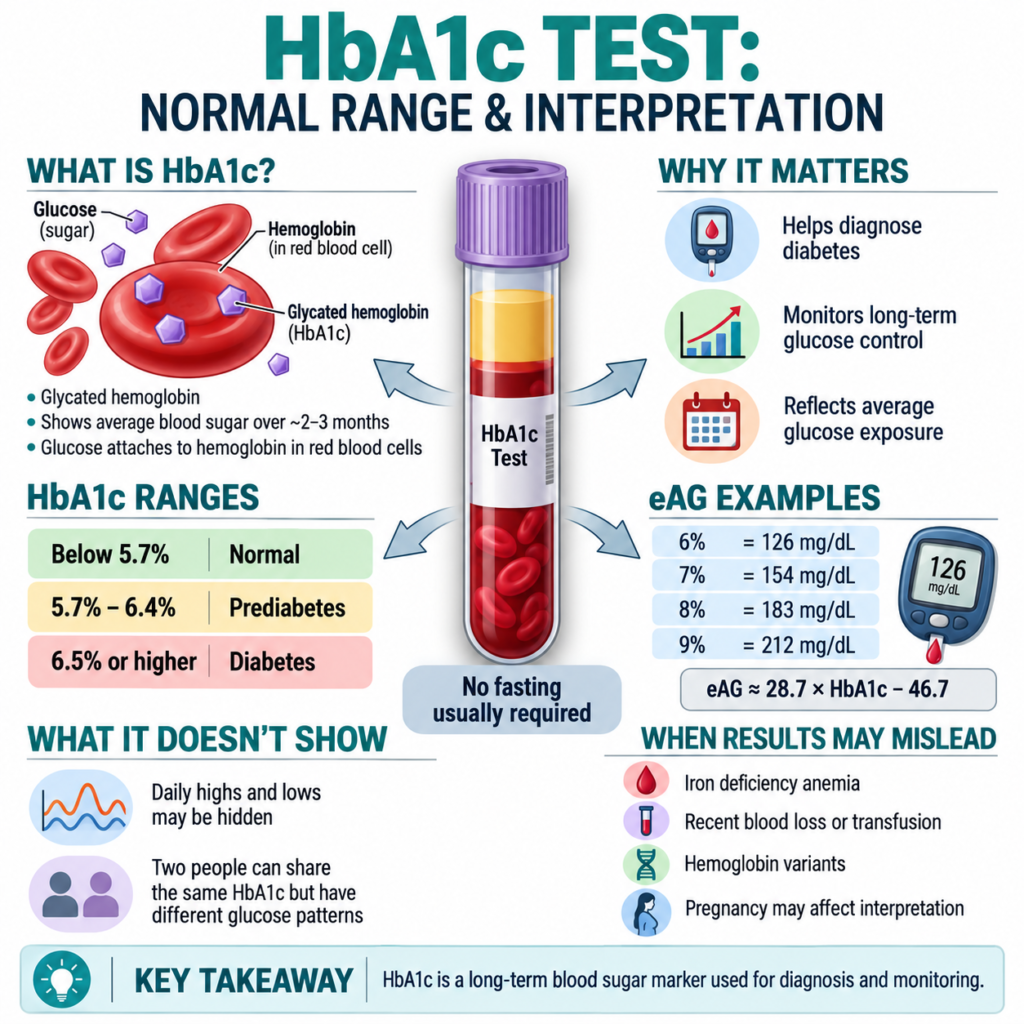
The HbA1c test, also known as glycated hemoglobin, is a blood test that reflects a person’s average blood glucose level over approximately the previous 2–3 months. It is commonly used for both the diagnosis and monitoring of diabetes mellitus.
What Is HbA1c?
Hemoglobin is the protein inside red blood cells that carries oxygen.
Glucose in the blood naturally attaches to hemoglobin through a process called glycation. Hemoglobin with glucose attached to it is known as glycated hemoglobin or HbA1c.
Because red blood cells normally survive for around 120 days, HbA1c reflects glucose exposure over the preceding weeks and months. Unlike fasting or random blood glucose tests, HbA1c does not measure glucose at only one particular moment.
Why Does HbA1c Represent About 2–3 Months?
HbA1c reflects glucose exposure over several weeks, although the result is influenced more strongly by recent blood glucose levels because younger red blood cells make up a significant proportion of circulating red blood cells.
Why Is an HbA1c Test Performed?
To Diagnose Diabetes
HbA1c can be used as a diagnostic test in appropriate clinical settings.
| HbA1c Result | Interpretation |
|---|---|
| Below 5.7% | Normal |
| 5.7%–6.4% | Prediabetes |
| 6.5% or higher | Diabetes range |
A diagnostic result generally needs confirmation on another day or with another diagnostic test if there are no clear symptoms or unequivocal hyperglycemia.
To Monitor Diabetes
For people already diagnosed with diabetes, HbA1c helps show whether blood glucose has generally been:
- Well controlled
- Moderately elevated
- Persistently elevated
It helps healthcare professionals determine whether the current diet, exercise and medication plan is achieving the desired level of glucose control.
HbA1c and Estimated Average Glucose
HbA1c can be converted approximately into estimated average glucose (eAG).
| HbA1c | Approx. Average Glucose |
|---|---|
| 5% | 97 mg/dL |
| 6% | 126 mg/dL |
| 7% | 154 mg/dL |
| 8% | 183 mg/dL |
| 9% | 212 mg/dL |
| 10% | 240 mg/dL |
| 11% | 269 mg/dL |
| 12% | 298 mg/dL |
A commonly used approximate formula is:
eAG (mg/dL) ≈ 28.7 × HbA1c − 46.7
For example, an HbA1c of 8% corresponds to an estimated average glucose of approximately 183 mg/dL. This is an average estimate, not the patient’s actual glucose level at every moment.
What Does HbA1c Tell Us That Fasting Glucose Does Not?
- Fasting blood glucose measures glucose at one particular time, usually after fasting.
- HbA1c provides a picture of long-term glucose exposure.
A patient may have a normal fasting glucose result today but an elevated HbA1c because glucose has repeatedly been high over the preceding weeks.
Conversely, a patient may have a high glucose level today but a relatively normal HbA1c if the hyperglycemia is recent.
HbA1c and Poor Glycemic Control
Higher HbA1c generally means greater average exposure to glucose. Persistent elevation is associated with an increased risk of diabetes-related complications, particularly:
- Retinopathy
- Nephropathy
- Neuropathy
- Cardiovascular complications
The goal of treatment is therefore not simply to make one glucose reading normal, but to maintain glucose within an appropriate range over time.
How Often Is HbA1c Checked?
If diabetes is stable and treatment goals are being met, HbA1c is usually checked about every 6 months.
If treatment has changed or glycemic control is not at goal, it is usually checked about every 3 months. The exact interval should be individualized.
Does the Patient Need to Fast?
No. HbA1c can generally be performed without fasting. The patient can usually eat and drink normally before the test.
Advantages of HbA1c
- No fasting required
- Reflects long-term glucose control
- Useful for monitoring treatment
- Relatively stable
Important Limitations of HbA1c
HbA1c is not always reliable. Anything that significantly changes red blood cell lifespan or hemoglobin characteristics can alter the result.
Conditions That May Cause a Falsely Low HbA1c
- Hemolytic anemia
- Recent significant blood loss
- Recent blood transfusion
- Some hemoglobin disorders
- Treatment of certain anemias
- Pregnancy-related changes in red blood cell turnover
Conditions That May Cause a Falsely High HbA1c
Some conditions with prolonged red blood cell survival can increase HbA1c. Iron deficiency anemia can sometimes produce a higher HbA1c than expected.
Hemoglobin Variants
Certain conditions may interfere with HbA1c depending on the assay method and the particular hemoglobin variant, including:
- Sickle hemoglobin
- HbC
- HbE
- Thalassemia
- Other hemoglobinopathies
If the HbA1c result does not match the patient’s glucose readings, possible HbA1c interference or altered red blood cell turnover should be considered.
HbA1c Does Not Tell Us Everything
HbA1c gives an average, so it can hide fluctuations.
For example, two patients could have the same HbA1c. One may have relatively stable glucose throughout the day, while another may have frequent episodes of very high glucose alternating with hypoglycemia.
Their HbA1c could still be similar. In some patients, self-monitoring of blood glucose or continuous glucose monitoring (CGM) provides additional information.
HbA1c vs Other Glucose Tests
| Test | What It Tells Us |
|---|---|
| Fasting Plasma Glucose | Glucose at a fasting point in time |
| Random Plasma Glucose | Glucose at any particular time |
| OGTT | How the body handles a measured glucose load |
| HbA1c | Average glycemic exposure over approximately 2–3 months |
| CGM | Detailed glucose patterns over days or weeks |
HbA1c in Pregnancy
HbA1c has limitations for diagnosing gestational diabetes, particularly because pregnancy changes glucose metabolism and red blood cell turnover. For gestational diabetes, tests such as the oral glucose tolerance test (OGTT) are generally more appropriate according to the clinical situation and guideline being followed.
Important Clinical Point
An HbA1c of 6.5% or higher is in the diabetes range, but diagnosis should not be based on the number alone when the clinical context is unclear.
For example, an HbA1c of 7.8% indicates diabetes-range glycemia and suggests that average glucose exposure has been substantially elevated over recent months. In a person already known to have diabetes, it indicates that glycemic control is above the usual target for many adults, although the individualized target may differ.
Easy Way to Remember
HbA1c = “3-month sugar report”
- Diagnosis: Is glucose exposure in the normal, prediabetes or diabetes range?
- Monitoring: Is diabetes treatment controlling glucose over time?
- Risk: Is there prolonged exposure to high glucose?
- Convenience: No fasting is usually required.
Key Values
- Below 5.7%: Normal
- 5.7%–6.4%: Prediabetes
- 6.5% or higher: Diabetes range
HbA1c is therefore a long-term marker of glycemic control rather than a single blood glucose measurement.
Free HbA1c Home Sampling
Our technologists provide professional home collection at your location and address all queries, ensuring convenience and care to minimize patient discomfort during the diagnostic process.