Access authoritative medical guides, diagnostic explanations, and wellness information prepared by the clinical specialists at Dr. Abdul Sattar’s Lab to assist you in making informed healthcare decisions.
Comprehensive Guide: Why Do We Need a CBC (Complete Blood Count) Test?
A Complete Blood Count (CBC) is one of the most frequently performed laboratory blood tests in clinical practice. It provides vital information regarding the primary cellular components of blood: red blood cells, white blood cells, and platelets. By evaluating these parameters, healthcare professionals can assess overall health status, diagnose underlying medical conditions, and monitor response to medical treatments.
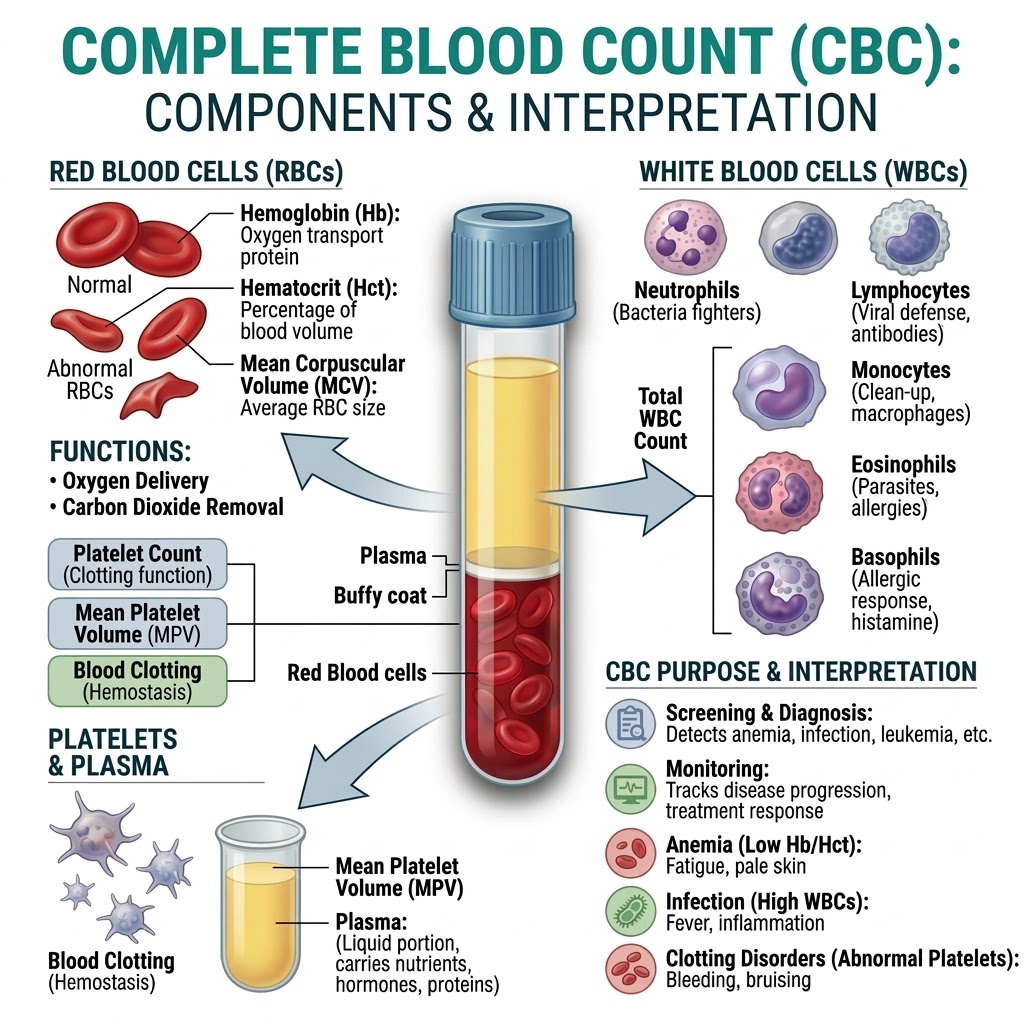
The diagram above details the key cellular elements evaluated in a standard CBC test and how blood breaks down into plasma and cellular components to provide diagnostic clarity.
What Does a CBC Test Measure?
A standard Complete Blood Count evaluates three primary blood cell lineages:
- Red Blood Cells (RBCs) and Hemoglobin (Hb): Red blood cells contain hemoglobin, an iron-rich protein responsible for transporting oxygen from the lungs to tissues throughout the body.
- White Blood Cells (WBCs): These cells constitute the core of the immune system, defending the body against foreign pathogens, infections, and systemic inflammation.
- Platelets (Thrombocytes): Specialized cell fragments that play a critical role in blood clotting and hemostasis to prevent excessive bleeding.
12 Key Reasons Why Doctors Order a CBC Test
1. To Screen for and Diagnose Anemia
A CBC measures hemoglobin concentration and red blood cell counts. A below-normal hemoglobin level typically indicates anemia, a condition characterized by a reduced capacity of the blood to carry oxygen. Common causes of anemia include:
- Iron deficiency
- Vitamin B12 or folate deficiency
- Acute or chronic blood loss
- Chronic underlying diseases
2. To Detect Infection
White blood cells act as the body’s defense mechanism against invading pathogens. An elevated total white blood cell count (leukocytosis) frequently indicates an active bacterial infection, physical stress, or systemic inflammation. Furthermore, the WBC differential provides valuable clinical clues regarding the specific origin of the infection.
3. To Assess Immune System Function
White blood cells are divided into five distinct sub-types, each serving a distinct immunological purpose:
- Neutrophils: Provide the primary response against bacterial infections.
- Lymphocytes: Manage viral infections and coordinate adaptive antibody responses.
- Monocytes: Assist in foreign tissue breakdown and chronic inflammatory clearance.
- Eosinophils: Respond to allergic reactions and parasitic infections.
- Basophils: Participate in histamine release and allergic inflammatory responses.
Evaluating both the absolute numbers and relative proportions of these sub-types offers detailed insight into immune system performance.
4. To Check Platelet Levels and Assess Bleeding Risk
Platelets are essential for clot formation and vascular repair.
- Low Platelet Count (Thrombocytopenia): Increases the risk of spontaneous bleeding, delayed clotting, or frequent bruising.
- High Platelet Count (Thrombocytosis): May elevate the risk of abnormal intravascular blood clot formation (thrombosis) in specific clinical conditions.
5. To Investigate Unexplained Fever
When a patient presents with a fever of unknown origin, a CBC assists clinicians in determining whether there is evidence of:
- Active systemic infection
- Inflammatory disorders
- Primary blood disorders
6. To Investigate Symptoms of Weakness and Fatigue
A CBC is commonly performed when individuals experience persistent, non-specific symptoms such as:
- Chronic tiredness or fatigue
- Generalized weakness
- Dizziness or lightheadedness
- Shortness of breath
- Pale skin (pallor)
These clinical manifestations are frequently associated with anemia or other underlying blood cell abnormalities.
7. To Detect Primary Blood and Bone Marrow Disorders
A CBC can provide early diagnostic indications for several hematological conditions, including:
- Anemia
- Leukopenia (abnormally low WBC count)
- Leukocytosis (abnormally high WBC count)
- Thrombocytopenia (abnormally low platelet count)
- Thrombocytosis (abnormally high platelet count)
- Bone marrow disorders and hematological malignancies, such as leukemia
8. To Monitor Chronic Diseases
Patients with long-standing medical conditions undergo periodic CBC testing to evaluate disease progression and systemic involvement. Key conditions monitored include:
- Chronic kidney disease
- Liver disease
- Chronic inflammatory diseases
- Persistent chronic infections
- Selected oncological conditions
9. To Monitor Treatment Efficacy and Safety
CBC tests are frequently repeated to assess how effectively a patient is responding to ongoing medical therapy:
- Iron Supplementation: Hemoglobin levels are tracked to evaluate recovery from iron-deficiency anemia.
- Chemotherapy: WBCs, red blood cells, and platelets are monitored to detect treatment-induced bone marrow suppression.
- Medication Safety: Certain prescription drugs require periodic CBC monitoring to ensure they do not cause adverse hematological effects.
10. To Evaluate Patients Before Surgery
A CBC is a standard pre-operative assessment tool used to determine:
- Baseline hemoglobin levels: To evaluate oxygen delivery capacity and potential blood loss risk.
- Platelet count: To ensure proper clotting ability during surgery.
- White blood cell count: To rule out active pre-existing infections.
11. To Monitor Maternal Health During Pregnancy
Plasma volume expands significantly during pregnancy, increasing the risk of gestational anemia. Regular CBC testing during prenatal care ensures monitoring of:
- Hemoglobin levels and anemia risk
- Platelet count
- White blood cell levels
12. As Part of Routine Health Screenings
A CBC is routinely included in comprehensive physical examinations, particularly when patient history, risk factors, or subtle symptoms warrant baseline preventive health screening.
Summary
A Complete Blood Count is a versatile, essential medical test that delivers vital quantitative data regarding blood health. While an abnormal CBC indicates underlying physiological changes, results are interpreted in conjunction with a patient’s clinical history, physical examination, and supplementary diagnostic investigations.
Free CBC Home Sampling
Our technologists provide professional home collection at your location and address all queries, ensuring convenience and care to minimize patient discomfort during the diagnostic process.